When you want to join in a Japanese traditional dance lesson, you can start with no worry about the following things.
①浴衣 Yukata, summer cotton kimono
There are many types and fabrics for kimono.
These days yukata is usually suitable for casual summer occasions such as Hanabi-fireworks viewing or summer festivals.
You can wear a yukata when you come to the class.
Yukata is made from cotton, and if you choose laundry machine-washable one, it’s easy to take care of it because you’ll sweat a lot.
When you choose yukata, be aware of selecting 裄, Yuki, the length of the middle point of your back to your wrist. When you buy a ready-made yukata, usually Yuki of yukata is shorter than Yuki of other types of kimonos.
In Japanese traditional dance, sleeves take important roles of choreographing, and it might shrink as you wash them, so please choose a bot longer yuki-yukata.
(For example, I am 162cm, but my arms are longer than ready-made Japanese M-sized kimono, so I chose L-sized kimono, and TL-sized yukata whose Yuki is around 68cm~70cm.)
②帯Obi-belt
When you wear yukata, choose 半巾帯, hanhaba-obi, half-width obi belt for it.
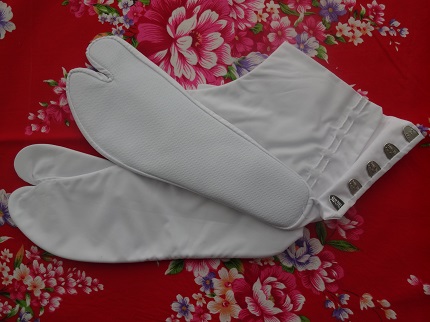
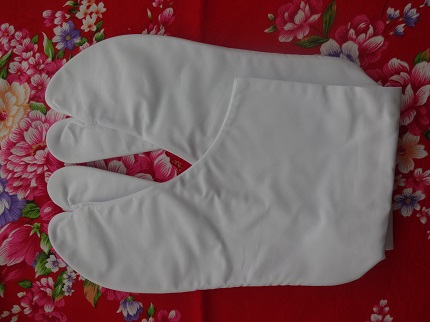
③足袋 Tabi white sox.
When you enter traditional Japanese houses or rooms, you take off your shoes.
Okeiko practice, of course, take place indoor, likely in the tatami-grass mat room, so prepare to have white tabi-sox. (if it is difficult to get them. Then wear white sox.)
When you chose tabi sox, chose “五枚こはぜ/gomai-kohaze” one, means with five kohaze-hooks.
④お扇子 Sensu, Fan
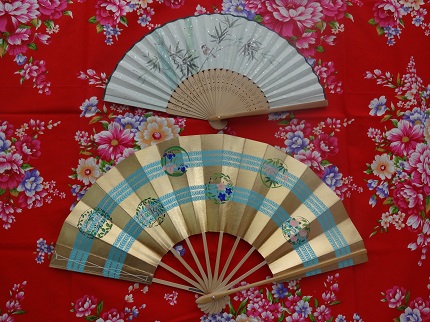
Like kimono, there many types of osensu-fans like for tea ceremony to daily-used one etc.
For Japanese traditional dance fan, chose for it.
The length is approximate: 29 cm
When you buy a fan for dance at a hop or internet, be sure to ask the staff if it is suitable for dancing.
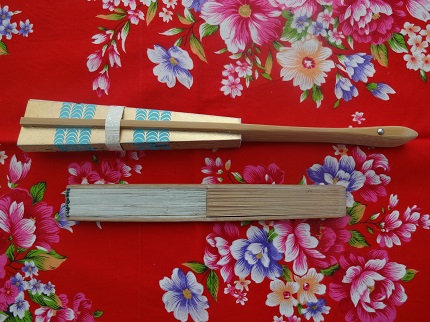
Osensu upper is the one for dancing.
⑤腰ひも, Koshi-himo, kimono stings
If you only wear yukata, then prepare 1~2 of koshihimo, and if you wear hadagi&susoyoke inside yukata, then 2~3 of them.
(It is always better to have extra just in case you forget to bring datejime, or when you brew tea or clean the room, and you need to tie your yukata sleeves into your back.)
⑥伊達締め Datejime, inner-belt
It helps to keep the beautiful shape of you in yukata/kimono and prevents to come loose.
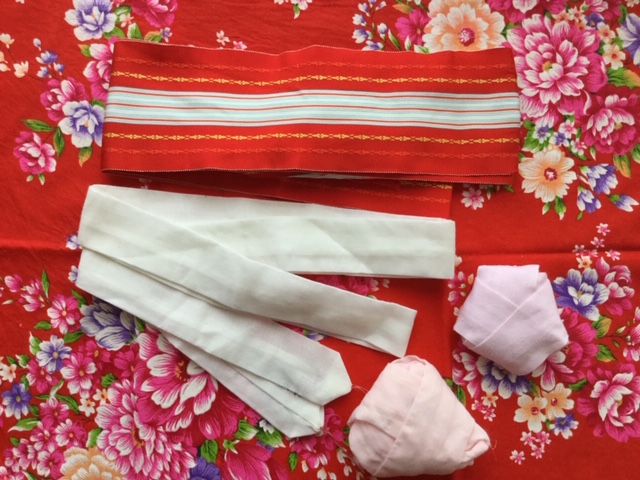
White and peach color strings are 腰紐 koshihimo.
⑦肌着と裾除け Hadagi underwear & Susoyoke petticoat
Hadagi makes you feel comfortable without touching your skin directly to yukata, and it prevents not to be seen inside when yukata’s décolletée become loose.
Susoyoke-petticoat makes your legs easier to move, and it keeps not to be seen inside when you move.
If you live abroad and it is difficult to prepare all of them, then you could make ⑤ koshihimo by yourself and use one of them as ⑥ datejime, or you could wear your knee-length slip and deep-V neck T-shirt as ⑦.
Let us have a beautiful kimono life and enjoy dance lesson together!!
Thank you for visiting my blog.